

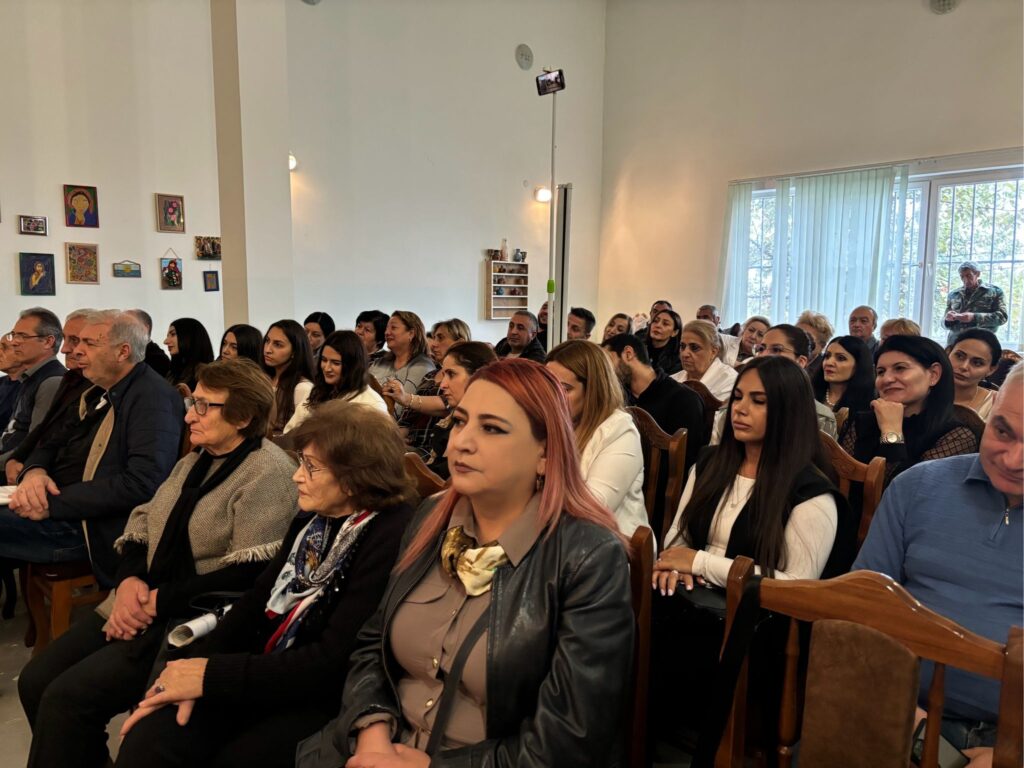
On October 17, 2024, a unique cultural event unfolded within the walls of the Armavir Criminal-Executive Institution of the Republic of Armenia. Far from a standard institutional activity, the performance of the play “Am I Dead? No, I’m Not” served as a profound case study in the psychological and social potential of art therapy within the carceral system. Themis International Human Rights Association had the honor of observing this production, which was led by the “Armavir” Criminal-Executive Institution’s Autonomous Cultural Union – an internal initiative organized and managed entirely by incarcerated individuals.

The Psychology of Creation: The Story Behind the Autonomous Cultural Union
The leadership of Mkhitar Mos-Mushegyan has been central to this movement. A professional director who has successfully transitioned his expertise into the challenging environment of the criminal-executive system, he has established a formalized space for artistic expression. This structured creative outlet is essential for maintaining cognitive function and emotional resilience in an environment often defined by systemic pressure.
Art therapy provides a vital outlet for those in prison, helping them to reconnect with themselves, their peers, and the broader community,” explains Mkhitar Mos-Mushegyan, the play’s author and director.
By adopting a “theatrical persona,” participants are able to engage in a process of self-discovery that addresses their inherent humanity rather than just their criminal record. This form of therapy allows for the exploration of complex emotions and personal reflection, which are critical components of psychological health during detention.
Professional Collaboration and Societal Reconnection
A critical element of this performance was the inclusion of professional actress Marianna Grigoryan from the “Verelk” Drama Theatre. The collaboration serves a dual purpose in the broader framework of rehabilitation and reintegration. First, it elevates the artistic quality of the work, providing the participants with a sense of professional accomplishment. Second, it breaks the intense social isolation inherent in prison life.
This dynamic interaction between professional artists and the incarcerated cast fosters a sense of societal connection that is often lost during long-term detention. It creates a “cultural bridge” that reminds both the performers and the public that the transition back to society begins long before a sentence ends. This cooperative effort is an actionable pathway toward successful social re-entry, reducing the stigma and deep-seated alienation that often lead to recidivism by proving that the individual is capable of professional and social collaboration.

Structural Evolution: From Retributive Justice to Rehabilitative Success
The work of the Autonomous Cultural Union highlights a necessary shift in the Armenian justice system. Traditional punitive models often fail to address the underlying psychological needs of the incarcerated, frequently leading to high recidivism rates. However, by supporting internal cultural organizations, the institution acknowledges that rehabilitation and reintegration are most successful when they are self-motivated. When prisoners take ownership of their own healing through art, they demonstrate the very social responsibility and discipline required to function in a democratic society. This initiative serves as an example on how institutional environments can foster growth through trust and autonomy rather than strictly through surveillance.
Themis International remains committed to the principle that human rights do not end at the prison gates. Our support for projects like such is rooted in the belief that the right to dignity and self-expression is universal. By analyzing the success of this initiative, we see a proven model for how the justice system can evolve. True reform is not merely about the duration of a sentence; it is about the quality of the transformation that occurs within that time. We look forward to continuing our advocacy for a system that views every incarcerated person as a potential contributor to society, capable of healing through the transformative power of art.


